

Key Takeaways
- Strong patio cover designs balance size, roof style, materials, attachment, and features.
- Gable roofs offer tall, airy ceilings; hip roofs hold up best in strong wind.
- An attached patio cover should match your home's roofline for a seamless look.
- North Texas clay soil makes proper footings and drainage essential.
- Fall is an ideal time to build, so your cover is ready before the spring rush.
If you've spent a North Texas summer squinting across a sun-baked backyard, you already know how much a little shade can change the way you use your outdoor space. The best patio cover designs in Dallas, Texas bring together the right size, roof style, materials, and features so your backyard feels like a natural extension of your home. Planning those choices before construction starts is what separates a cover you love from one that simply provides shade.At Decathlon Construction, we've spent over twenty years designing and building patio covers across Dallas and the surrounding Metroplex, including Sachse, Plano, Garland, and McKinney. Here's what to plan for, and why fall is one of the best times to get started.
Why Do Dallas Homeowners Add Patio Covers?
Dallas homeowners add patio covers because the local climate makes uncovered outdoor space difficult to enjoy for months at a time. Summer highs regularly reach the upper 90s, with triple-digit stretches common in July and August, according to the National Weather Service in Fort Worth. That kind of extreme heat takes a toll on outdoor spaces, and without shade, many patios sit empty from early summer through September.
The city has always grown around its landscape. Dallas began in 1841 as a small trading post that John Neely Bryan established near a natural crossing on the Trinity River, as the Texas State Historical Association documents. Today, Dallas homeowners are still building around the land and the weather, now with covered outdoor living spaces designed for long, hot summers.
A well-designed patio cover protects outdoor furniture from UV damage, keeps rain off your seating area, and helps shade nearby windows and doors. It also creates usable outdoor living space for family dinners, weekend gatherings, and quiet evenings outside.
What Goes Into the Best Patio Cover Designs in Dallas?
The five key elements of a patio cover design are size, roof style, materials, attachment method, and added features. Each decision affects how the space looks, how it performs in North Texas weather, and how comfortable it feels day to day.
Size and Layout
Size shapes how you'll actually use the space. A compact cover works well over a small bistro table or a pair of lounge chairs, while a larger cover can shelter a full dining set, an outdoor sectional, and room to move around both. Think about how many people you typically host and which activities matter most to your household.
Our guide on choosing the right patio size walks through sizing a patio around dining, lounging, and entertaining, and these patio layout tips help you arrange the space once you know your footprint.
Roof Style
Roof style defines both the look of your patio cover and how it handles wind, rain, and heat. Popular patio cover styles in North Texas include:
- Shed roof: A single sloped plane with a clean, modern profile.
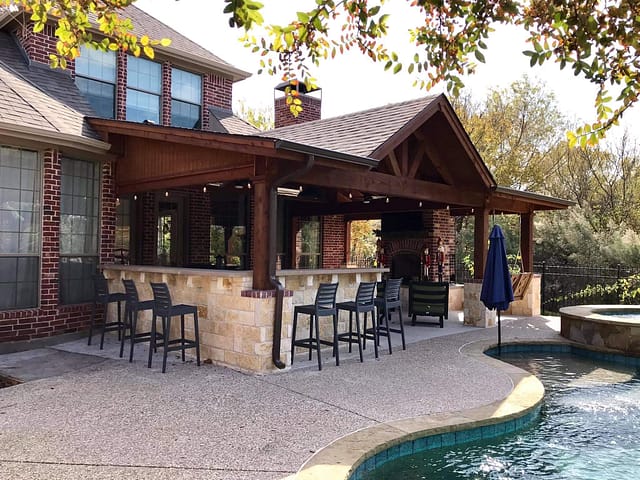
- Gable roof: Two slopes meeting at a peak, creating a tall, airy ceiling that pairs well with fans and lighting.
- Hip roof: Slopes on all sides for a low, streamlined look that holds up well in strong wind.
- Free-standing cover: Built on its own posts away from the house, ideal for poolside lounging or a garden retreat.
Gable roofs are especially popular because they blend naturally with most home rooflines. Learn more in our article on adding a gable roof patio attached to your house.
Materials and Finishes
Materials determine the character of your patio cover and how well it stands up to the Texas sun. Cedar and other natural woods bring warmth and texture, while painted lumber delivers a crisp, classic finish. Roofing that matches your existing shingles makes the cover look like an original part of the home. The ceiling deserves attention too, and our patio undersides range from exposed open rafters to smooth, painted finishes.
Attached or Free-Standing
An attached patio cover connects directly to your home's roofline, creating a seamless transition from indoor to outdoor living. Because the new roof ties into the existing structure, it requires careful flashing, drainage planning, and structural support where the two rooflines meet. A free-standing cover skips that connection but relies on its own complete post-and-footing system. Our overview of how to build a patio cover explains more about how each type comes together.
Features That Make the Space Livable
The best covered patio ideas go beyond the roof itself. Ceiling fans keep air moving on humid evenings, recessed lighting extends your time outside after sunset, and outdoor outlets make it easy to add speakers or heaters. Stone post wraps and masonry details tie the cover into your home's exterior, and many homeowners plan for a fire feature, though it's worth knowing whether a fire pit can be used under a covered patio before you design around one.
How Does North Texas Weather Shape Your Design?
North Texas weather shapes nearly every structural decision in a patio cover. Intense summer sun fades and weakens low-quality finishes, spring storms bring hail and heavy rain, and cold fronts and hard freezes can drop temperatures quickly in winter.
The ground matters just as much as the sky. Much of the Dallas area sits on the Blackland Prairie, where expansive clay soil swells when wet and shrinks as it dries. That movement puts pressure on posts and footings, which is why the work below the surface determines how long an outdoor space lasts, and why proper foundations and drainage are built into every patio cover we design.
What Happens During a Patio Cover Design Consultation?
A design consultation turns your ideas into a plan built for your home and yard. Here's how the process works at Decathlon Construction:
- On-site visit: We walk your backyard, measure the space, and look at sun exposure, slope, drainage, and your home's existing roofline.
- Design and material selection: We help you choose the roof style, materials, ceiling finish, and features, using examples from our patio cover gallery.
- Permits: We handle the permit process with your city and help you prepare anything your HOA requires.
- Construction: Our licensed tradesmen build your patio cover, keeping you updated from start to finish.
- Final walkthrough: We review the finished project with you to make sure every detail meets your expectations.
Is Fall a Good Time to Build a Patio Cover in Dallas?
Yes, fall is one of the best times to build a patio cover in Dallas. Milder temperatures make for comfortable, productive construction days, and finishing in fall means your new outdoor space is ready before the spring rush, when demand for outdoor living projects across North Texas picks up. We cover more reasons in our post on why you should plan your outdoor upgrades in the fall.
Building now also gives you a covered space for crisp fall evenings, football watch parties, and holiday gatherings. When warm weather returns, you'll already be relaxing in the shade.
Start Planning Your Patio Cover This Fall
The best patio cover designs in Dallas come down to your home's architecture, your backyard's layout, and how your family wants to spend time outside. With over twenty years of experience building patio covers across the Dallas Metroplex, Decathlon Construction guides you through every step, from design and permits to the final walkthrough. Whether you're picturing an attached patio cover with a gable roof or a free-standing retreat by the pool, our team will help you bring your covered patio ideas to life. Contact us today to schedule your design consultation and start enjoying your backyard this fall.