

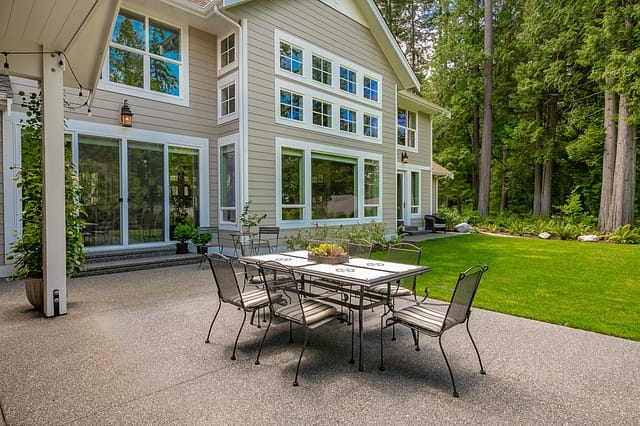

One of the most important decisions a homeowner can make when planning an outdoor living upgrade is the size of their patio. A patio can be used for entertaining, cooking, lounging, and taking in the fresh air, making it an extension of the house. The ideal patio size depends on a number of practical factors because every family uses their outdoor space in a different way. Fortunately, most homeowners can determine the ideal size by considering their space, daily activities, and how they want the patio to function.
This guide walks through the most helpful steps for sizing a patio in a simple and easy way. By the end, you will know how to measure your yard, plan for furniture, think through traffic flow, and match the layout to your long-term needs.
Why Patio Size Matters
An overly small patio can feel confined and frustrating. An overly large patio can feel empty, cost more, and take up yard space that could be better utilized for play areas or gardens. The size of a patio influences:
- Comfort
- Safety
- Furniture placement
- Budget
- Long-term usability
- Natural light and shade
- Flow between indoor and outdoor spaces
When the size is right, a patio feels natural and easy to use. It supports the activities you love without wasting space or creating obstacles.
Start With How You Want to Use the Patio
Have a clear idea of how the patio will be used before taking any measurements or making any sketches. This serves as the basis for selecting the perfect size. When planning concrete patio installation in Arlington, TX, homeowners often start by thinking about how they will use the space, since this helps guide the right size and layout.
Ask yourself questions like:
- How many people will use the patio regularly
- Will the patio be used for quiet relaxation or active gatherings
- Do you plan to grill or add an outdoor kitchen
- Will you eat outside often
- Do you want space for a fire pit
- Do you host parties or prefer small groups
- Do children or pets need open play areas nearby
Below are common patio uses and the typical amount of space they require.
Relaxation and Lounge Areas
A simple lounge area with two to four chairs, a small table, and maybe a chaise typically needs at least 8 by 10 feet. More room may be needed for larger furniture.
Outdoor Dining
A dining table for four usually fits well on a 10 by 10 foot patio. A table for six works better on 12 by 12 feet or more. If a grill or prep station is nearby, add several more feet for safe spacing.
Outdoor Kitchen
A small grill needs about 3 by 5 feet, while a full kitchen with counters, appliances, and storage may require 10 to 15 feet in width along one side of the patio.
Fire Pit Area
A fire pit should have space for seating around it. A round layout for four chairs may need 12 to 14 feet in diameter.
Mixed-Use Patios
If you want relaxation space, a dining area, and room for cooking, the patio may need to be at least 300 to 400 square feet. Larger yards can support even more zones.
Measure Your Yard and House Layout
Next, take a close look at the available physical space. The yard, property lines, doors, windows, and general layout of the house all influence the size of the patio.
- Check Door Placement: Most patios connect directly to a back door or sliding door. The patio should start wide enough to allow easy movement in and out. A patio that is too narrow at the door often feels awkward.
- Look at Windows and Views: You may want the patio placed where it preserves a nice view of the yard. If you want to see the patio from the living room or kitchen, note how those windows line up.
- Review Property Lines: Patios cannot cross property boundaries, and some neighborhoods require a certain distance from fences or neighboring yards.
- Check the Slope of the Yard: Flat yards are straightforward, but sloped areas may require extra grading or a retaining wall. This can influence the final size or shape.
- Measure Available Space: Take measurements in multiple directions. Sketch rough shapes for where the patio can fit. Even a simple drawing helps visualize the potential size.
Think About Furniture and How Much Space It Takes
Underestimating the amount of space patio furniture requires is one of the most common mistakes. Chairs pull back more than they should. Tables require space for people to move around. Seating in a fire pit requires maintaining a safe distance from the flames.
Basic Furniture Spacing Tips
- Leave 2 to 3 feet of walking space behind chairs
- Leave 3 feet of space around dining tables
- Lounge chairs often need 6 feet of length
- Outdoor sectionals may require 10 to 12 feet of total width
If possible, place furniture on your lawn and measure the footprint. This will give you a real-world sense of how much room you need.
Consider How People Move Through the Space
One of the most important considerations in selecting a patio size is traffic flow. For people to move, gather, serve food, get to the grill, and sit down, there must be clear pathways. Smooth traffic flow makes a patio more comfortable and safer.
A good rule is to create at least 3 feet of space for foot traffic. Think about:
- The path from the door to the seating
- The path from the seating to the grill
- The path around the dining table
- How guests move during gatherings
- Whether children or pets need open walkways
Match the Patio Size to the House Size
A patio should fit naturally with the scale of the house. A large patio might overwhelm a small home, while a tiny patio may feel out of place next to a large home.
- Small Homes: A patio that is 10 by 10 feet to 12 by 12 feet often works well.
- Medium Homes: A patio between 200 and 350 square feet can support multiple uses.
- Large Homes: Large homes can support patios around 400 square feet or more, especially if there are several activity zones.
The goal is balance. The patio should feel like a natural extension of the home rather than an oversized or undersized feature.
Think About Long-Term Plans
Homeowners often add features over time, such as a pergola, lighting, a hot tub, a garden bed, a second seating area, or an outdoor fireplace. Even if these additions are not planned right away, thinking ahead helps avoid outgrowing the patio later, and leaving extra space for future changes is often a smart move.
Even if these additions are not planned right away, thinking ahead helps avoid outgrowing the patio later. Leaving space for future changes is often a smart move.
Consider the Shape of the Patio
Patio size is not just about square footage. Shape also matters. Common patio shapes include:
- Rectangular Patios: Good for dining areas, grills, and sectionals. Easy to measure and plan.
- Square Patios: Compact and simple. Works well in small yards.
- Round Patios: Creates a softer look and works well with fire pits.
- L-Shaped or Multi-Level Patios: Useful when combining separate activity zones.
Choosing the right shape can give you the size you need without taking up too much space in the wrong areas.
Account for Shade and Sun Exposure
The amount of sunlight your patio gets can influence how you size and position it.
- South-facing patios get the most sun
- North-facing patios get the most shade
- East-facing patios enjoy morning sun
- West-facing patios get stronger afternoon heat
If you plan to spend long hours outside, consider how shade structures, trees, or orientation affect comfort. A patio placed in intense afternoon sun may need extra square footage for shaded seating. If you are looking into patio covers in Sachse, TX, start by thinking about how you plan to use the patio so you can choose the size that works best.
Think About Outdoor Living Zones
Many homeowners want a patio that supports multiple activities. Creating separate zones can help organize the layout.
Common Zones
- Dining zone
- Lounge zone
- Fire pit zone
- Cooking zone
- Bar or beverage zone
- Sunbathing zone
You do not need a huge patio to support multiple zones, but each zone still needs enough space for comfortable use. Dividing the patio into smaller areas can help visualize the final layout.
Calculate the Ideal Patio Size
Once you have a clear idea of how you want to use the patio, combine the following:
- Furniture footprint
- Walking space
- Door placement
- Future plans
- Traffic flow
- Yard space available
A simple formula is:
Furniture area + Walking space + Extra room for comfort = Ideal patio size
For example, if the dining set covers 100 square feet and you need 60 square feet for walking space, the patio may need to be around 160 to 200 square feet.
Examples of Popular Patio Sizes
Here are real-world examples that help visualize the right amount of space.
Small Patio
- 12 by 12 feet
- Fits a small table for four
- Works for a compact lounge chair setup
Medium Patio
- 14 by 18 feet
- Space for a dining set plus a small grill area
Large Patio
- 20 by 20 feet
- Ideal for multiple zones
- Comfortable for six to eight guests
These are only general guidelines, but they give a useful starting point.
Frequently Asked Questions About Patio Size
1. What is the best patio size for a small backyard?
Most small backyards can support a patio around 10 by 10 feet or 12 by 12 feet. This is usually enough space for a small dining set or a couple of lounge chairs. The key is to focus on one main activity rather than trying to fit too many zones.
2. How much space do I need around outdoor furniture?
A good rule is to leave 2 to 3 feet of space behind chairs and around tables. This gives people room to move comfortably. If the patio includes a grill or fire feature, add extra space for safety and easy access.
3. Should my patio match the size of my house?
Yes, the patio should feel balanced with the scale of your home. Smaller homes usually look best with patios between 100 and 200 square feet. Medium and large homes can support much larger patios with multiple zones.
4. How big should a patio be for entertaining?
If you often host guests, a patio around 300 to 400 square feet provides space for a dining area and a separate lounge area. Larger gatherings may need even more room, especially if there is a grill, bar, or fire pit.
5. What if I want to add features later?
If you plan to add a pergola, fire pit, or outdoor kitchen in the future, it helps to leave extra open space now. Many homeowners choose a slightly larger patio so they do not run out of room when upgrading later.
Final Thoughts
The right patio size is not about guessing or following a trend. It comes from understanding how you want to live in your outdoor space. When you think about furniture, traffic flow, activities, house size, and long-term plans, the right layout becomes much clearer.
A well-planned patio can give your family a comfortable, useful, and relaxing space for many years. With the steps in this guide, you can choose the best size for your needs with confidence and create an outdoor area that fits your daily life. For expert help bringing your outdoor vision to life, contact Decathlon Construction to start planning the perfect patio for your home.