

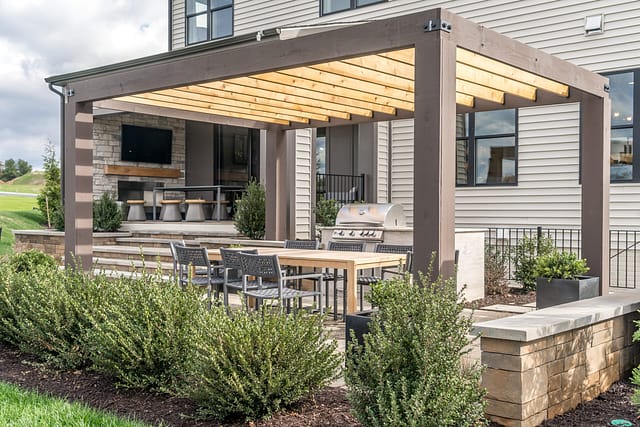

You see potential when you look out your back door. That patch of grass or cracked slab of concrete could be so much more. You envision a lovely and useful living area for weekend get-togethers with friends, evening cocktails with a patio bar, and morning coffee. This is where understanding patio layout design can help you transform that unused space into your own outdoor haven. However, beginning can seem like a daunting undertaking. When it comes to patio ideas, where do you even start?
Making a plan that works for your outdoor space, your life, and your budget is the key to learning how to design a patio layout. You wouldn’t believe how easy it is, and how Decathlon Construction can help streamline the process.
First Things First: The Planning Phase
You need a well-thought-out plan before you construct patio elements or purchase any furniture. Great patio designs are not created by chance. It begins with homework and careful consideration.
What Will You Use Your Patio For?
Since the response will influence your entire floor plan, this is the most crucial question you can ask yourself. Would you like to have a special outdoor dining space here for big family dinners? Then you’ll need plenty of space for seating and a big patio table.
Perhaps all you want is a peaceful place to sit and read a book while taking in the sounds of the birds. For that, a smaller, more private patio area would be ideal. Additionally, your patio could be used for a kid’s play area, an outdoor kitchen, or just relaxing by a fire pit. List the top three things you want to do in your new outdoor living area. This list will help you identify the various zones you require and serve as a guide for all future decisions.
Time to Measure Everything
Now take out a notepad and a tape measure. You must be fully aware of the situation you are in. Take measurements of the whole space you want for your patio and make a rough paper sketch of the layout. In addition to the measurements, take note of the positions of the windows, doors, hose bibs, and any existing features, such as air conditioners or trees. These immovable objects must be avoided. When choosing where to put your seating area or shade structure, keep an eye on the sun and shade patterns throughout the day.
For a project to be successful, precise measurements are essential. They guide you in figuring out how much material you’ll need for a paver patio and what size patio furniture will fit comfortably. Making a guess now could result in significant headaches and additional expenses later.
Let’s Talk Money: Your Budget
The cost of designing your ideal outdoor area can range from low to high. Size, materials, and whether you do the work yourself all affect the final cost. Before you fall in love with expensive materials or ornate furniture sets, it’s a good idea to establish a reasonable budget. You should budget for more than just the hardscaping. Consider the price of landscaping, furniture, lighting (such as string lights), and perhaps even a fire pit or pergola. A carefully thought-out budget avoids financial surprises and keeps your project on schedule.
Being truthful about your budget will help you choose from a variety of patio designs. This also assists you in deciding whether you should hire a professional or attempt the paver patio project yourself. You can even use the planning skills you learn here for other home projects, such as remodeling your bathroom.
Know The Local Rules
Although it’s not particularly exciting, this step is vital. There are rules governing construction projects in many towns and cities. Building a patio may require a permit, particularly if it is large, attached to your home, or has gas or electrical connections for an outdoor kitchen. For details on property line setbacks and permit requirements, visit the website or office of your local building department. If you have a homeowner’s association, it’s a good idea to inquire about any particular regulations they may have. As a courtesy, you might also want to talk to your neighbors about maintaining a good privacy policy between yards.
You can get all the information you require with a brief phone call or online visit. By following the guidelines from the beginning, you can avoid penalties or the painful process of having your hard work undone. This step is frequently taken care of by a professional design studio you hire, and their plans will explicitly indicate that they own all rights reserved.
How to Design Your Patio Layout: A Step-by-Step Guide
Now that your preparation is complete, you can move on to the creative stage. At this stage, your outdoor living area concept starts to take shape on paper. The moment has come to actually design your own patio.
Choose a Shape and Size
The shape of your patio should complement the architectural style of your house. Generally speaking, a patio that is square or rectangular looks the nicest and provides your angular, modern house an organized, professional vibe. Because it will mix in more naturally with the garden design, a curved or freeform patio can be a preferable choice for a home with softer lines or a cottage atmosphere.
The size of your patio is related to its primary use. Because it takes up minimal space, a compact bistro table for two is perfect for a small patio. However, a complete outdoor dining setting needs a lot more room for eight people to feel at ease and not cramped.
This simple tutorial will help you visualize how much space is needed for different uses. By using this chart, you can stop an expansive patio from feeling empty or a small space from feeling unusable. These are general suggestions for your favorite outdoor activities.
Patio Function |
Recommended Minimum Size |
| Small Bistro Set (2 people) | 6 ft x 6 ft (36 sq ft) |
| Lounge Chairs (2 chairs, 1 table) | 7 ft x 7 ft (49 sq ft) |
| Dining Table (4-6 people) | 10 ft x 12 ft (120 sq ft) |
| Sectional Seating Area (4-5 people) | 12 ft x 12 ft (144 sq ft) |
| Full Outdoor Living Area (Dining + Lounge) | 16 ft x 20 ft (320 sq ft) |
Create Different Zones
Even on an intimate patio, creating distinct spaces enhances the living area’s usability. Think of it as the open-concept living room of your house. You have a place to eat, a place to relax, and possibly a place to read. Your patio is no different. You may have a grilling area near the kitchen entrance for convenience. You could set up an eating area in the center and a lounging area with cozy seats and a fire pit out to one side to make a fully functional outdoor living area.
Use outdoor rugs to create visual distinction between these areas. Grouping patio furniture also helps to create clear zones. This simple approach will make your patio look larger, more organized, and more like a true extension of your home’s interior design. If your vision includes a multi-level outdoor space or a seamless extension from indoors, working with a skilled deck builder in Dallas can help you elevate your layout beyond just a patio.
Think About Traffic and Flow
Think about the mobility of people on your patio. The paths from the home door to the yard and between the different zones must be clear. You also need space to maneuver around furniture without bumping into things or squeezing past them. For large walks, it’s a good idea to leave about three feet. This allows people to move around in comfort. Steer clear of the typical and bothersome error of obstructing the grill’s path from the kitchen entrance.
Take into consideration relocating. It is not your place to carry a tray of beverages through a maze of chairs. A creative plan transforms your patio from a clumsy obstacle course into a straightforward and enjoyable space.
Using Online Design Tools
You can use a variety of free online tools to see how your patio will look. With these platforms, you can easily drag and drop objects to build a digital floor plan. You can often accept or reject settings that contain options like a cookie list or prompts to apply cancel consent for targeted advertising in order to access the design features. The tool often contains menus with different furniture elements. You can click a button with a label label or a checkbox label to add an item to your plan. If you make a mistake, seek for a list clean button or an undo tool to start over.
Picking the Best Materials for Your Patio
The material you select for the patio floor has an impact on the entire outdoor space. It has an impact on its appearance, feel, and level of maintenance. There are many excellent options available, ranging from modern concrete patio ideas to classic brick patio patterns.
Pavers, Concrete, or Natural Stone?
These are the top three choices for patio surfaces. For creative patio ideas, pavers are perfect since they are versatile and available in a large range of sizes, shapes, and colors. Pavers can also be replaced in the event that they are damaged. Often, pouring concrete is a simpler and cheaper option. To make it look like stone or brick, it can be embossed or tinted. However, it might crack over time, especially in colder climates, and repairs will show more clearly.
Natural stone, such as slate or flagstone, is incredibly durable and has a beautiful upscale appearance. It is the priciest choice and typically needs to be installed by a professional.
Considering Your Climate
When choosing materials, your location is very important. Certain materials work better than others in regions with frigid winters and freeze-thaw cycles. Water can be absorbed by porous materials, where it freezes, expands, and cracks or flakes. For cold climates, dense natural stones and concrete pavers are excellent options. Choose materials that won’t get unbearably hot underfoot if you live in a hot, sunny climate; light-colored pavers work well in this situation. For added comfort, think about installing outdoor ceiling fans or even a shade structure.
Consider rain as well. For safety, you should have a non-slip surface, particularly near a pool or other water feature. To ensure that water drains correctly and doesn’t cause problems, your patio should also be sloping slightly away from the foundation of your house. For year-round comfort, consider adding shade with patio covers in Sachse, TX that provide protection from both intense sun and unexpected rain.
Furnishing Your New Outdoor Room
Your patio layout is planned, and your materials are chosen. Now you can focus on the patio furniture and accessories. This is what truly turns a slab of stone into a comfortable and inviting outdoor living space.
Choose Furniture That Fits
In design, scale is crucial. A small patio will feel crowded and unusable with large, heavy furniture. Instead, search for multipurpose pieces, leaner lines, or furniture with a smaller footprint. Tiny furniture can appear disorganized and unimportant on a large patio. You are more free to design several seating areas and select large furniture sets. The furniture should be the right size for the patio and its intended use.
Before you buy, use your patio sketch. To depict the furniture you want, cut out small paper shapes and arrange them on your floor plan. Before you make the decision to purchase your preferred outdoor furniture, this helps you get a true sense of the area and flow.
Light Up Your Nights
Proper lighting improves safety and lets you enjoy your patio long after the sun sets. Consider layering your light in the same way that you would your interior decor. This entails blending various light types for mood and purpose. Ambient lighting, such as post lights, wall sconces, or string lights, is necessary for general illumination. Particular spaces, such as the dining table or outdoor kitchen, require task lighting. Lastly, accent lighting can be used to create a stunning focal point by highlighting a tree, water feature, or lovely plants.
Today, a wide variety of solar-powered lighting options are available. This makes adding outdoor lighting simpler and more economical than before. At night, well-considered lighting completely changes the area, increasing its usability and promoting a welcoming atmosphere.
Add Softness and Greenery
With all that wood and stone, a patio may feel a little rough, so it’s crucial to soften the edges. Define a seating area with an outdoor rug, then add cushions and throw pillows for comfort and a splash of color. The area feels warm and welcoming with these patio accessories.
For your patio to blend in with the surrounding landscape, plants are essential. Patios of all sizes can benefit from container gardens, which let you use tall plants to create privacy, grow your own herbs close to the kitchen, or add color with flowers. This method helps your hardscaping and the rooms’ garden areas blend together.
This softness can be brought to life with a variety of gorgeous furniture options and wicker patio sets. Your patio truly feels like an extension of your house thanks to these finishing touches. For you and your guests, it’s what makes it unique and inviting.
Bringing Your Patio Design to Life
Your plan is now complete. Function, size, materials, and furnishings have all been taken into consideration. Combining everything into a single final drawing is the last step before any work starts. A pencil and basic graph paper can be used for this, or you can use one of the many free online landscape design tools. A thorough visual plan assists you in identifying any possible issues with spacing or flow before they become expensive errors. A great focal point should be marked clearly, such as a patio bar or fireplace. Take a final look at everything. Does the flow of traffic function? Does the large patio table have enough room? Do you like how your outdoor kitchen and seating area are positioned?
You are prepared to create patio happiness once you are satisfied with your floor plan. You can be satisfied with the results whether you hire a professional or do it yourself. You are certain that you have produced a well-considered design that you will enjoy for many years to come.
From Planning to Reality: Your Patio Project Starts Now
Although creating an outdoor space can seem like a major task, it doesn’t have to be stressful. You can design a beautiful and useful living space by breaking it down into smaller, more manageable steps. Keep in mind that any great patio, no matter how big or small, starts with a solid plan. After starting with an idea, you now have a clear course of action. You’ve measured your area, thought about what you need, and chosen the appropriate components, including materials and furniture ideas.
Gaining knowledge about patio layout has prepared you to create the backyard of your dreams. You can now proceed with assurance, prepared to design a fantastic outdoor living area. Soon, your new patio will be the ideal place to unwind, host guests, and create memories. Ready to bring your vision to life? Partner with Decathlon Construction to start building the perfect patio for your outdoor lifestyle.