

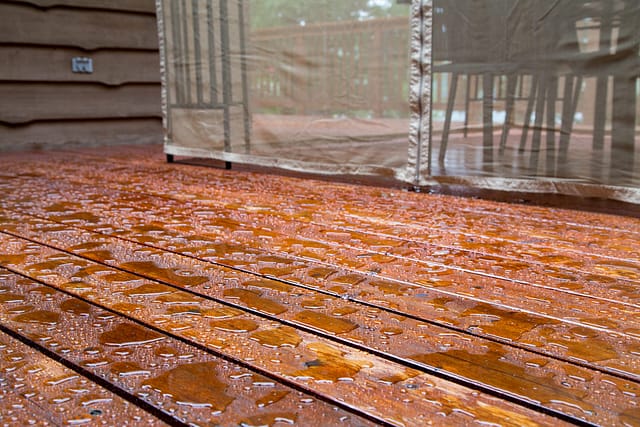

Any homeowner is responsible for keeping their deck protected. But how frequently should your deck be sealed? Many people are troubled by this question, particularly when the weather begins to change. Let’s discuss the specifics of deck care and determine the ideal timetable for sealing your outdoor retreat. On any given day, the weather takes a toll on your deck. Wear and tear is caused by foot traffic, rain, snow, and sun. That’s why sealing is so important. It’s like adding a protective shield to your deck to keep Mother Nature’s mood swings at bay.
The problem is that there is no universally applicable rule regarding how frequently you should seal your deck. It is dependent upon several factors. To help you make the best decision for your house, let’s dissect it.
Factors That Affect Sealing Frequency
The sealant on your deck may deteriorate more quickly or more slowly depending on each of these factors. For instance, compared to a shaded, infrequently used deck, a deck that receives a lot of sun and barbecues may require more frequent sealing. If you’re just starting out with a new project, working with an experienced outdoor deck builder in Frisco, TX, can make sure that your deck is built to withstand local climate conditions from the beginning. Your sealing schedule is heavily influenced by these factors:
Type of Wood: Compared to hardwoods like cedar or redwood, softer woods like pine often need sealing more frequently because they are more porous and have a tendency to absorb moisture quickly. The wood’s inherent density and oil content can have a big influence on how weatherproof it is.
Climate and Weather Exposure: Decks in regions with high humidity, snowfall, or rainfall are more susceptible to mold growth and water damage, and hot, dry weather can accelerate the fading and cracking of wood. Temperature variations throughout the year also affect the sealant because expansion and contraction increase its stress.
Amount of Foot Traffic: Decks that are used frequently, particularly those that are close to outdoor kitchens, pools, or entrances, deteriorate more quickly. Pets, furniture, and shoes all cause surface abrasion that accelerates the breakdown of the protective layer.
Quality of the Previous Sealant Job: When properly applied, a professional-grade sealant can last for years longer than a hasty do-it-yourself application using a subpar product. The longevity of the sealant is also influenced by how well the surface was prepared, including cleaning, sanding, and drying.
Sun Exposure: One of the main causes of wood fiber fading, drying, and weakening is UV radiation. In contrast to shaded decks shielded by trees, awnings, or pergolas, decks that are exposed to direct sunlight all day long will typically require resealing sooner.
Instead of using a one-size-fits-all schedule, you’ll have a better idea of when your deck needs to be resealed if you take these factors into consideration.
General Guidelines for How Often Should You Seal Your Deck
Although each deck is different, there are some general guidelines to follow. The majority of professionals advise sealing your deck every one to three years.
Pressure-Treated Wood: Every two to three years
Cedar: Every one to two years
Redwood: Every two to four years
Composite Decks: Sealing is rarely necessary; refer to the manufacturer’s instructions.
Keep in mind that these are only recommendations. Depending on the circumstances, your deck may require sealing more or less frequently. If you’re planning a new build, choosing a trusted team for deck installation in Plano, TX, can also help you select the right materials that balance beauty and maintenance needs.
Signs It’s Time to Reseal Your Deck
It’s wise to watch for indications that your deck needs some TLC rather than following a rigid schedule. Here are a few warning signs:
- There are no longer any water beads on the surface.
- Wood appears dry or begins to fracture.
- The color has faded.
- Splinters are becoming more frequent, and mold or mildew is beginning to grow.
It’s most likely the time to apply the sealant if you observe any of these symptoms. If you wait too long, you may have to deal with more severe damage. Not sure where to start? Check out this step-by-step guide on how to seal a deck for a simple process you can follow.
The Water Test: A Simple Way to Check
Are you unsure if sealing is necessary for your deck? The water test is a quick and easy way to find out. Simply mist your deck’s surface with water and observe how it responds. Your sealant is still protecting your skin if the water beads up. However, it indicates that your deck is ready for resealing if the water absorbs quickly. This quick test can help you avoid waiting too long or resealing too frequently. Every deck owner should be aware of this useful tip.
Preparing Your Deck for Sealing
Preparing your deck is important before beginning the sealing process because it’s the secret to long-lasting results. First, give the deck a thorough cleaning to get rid of debris, dirt, and mildew. To distribute an even application of the new coat, remove any areas that have old, flaking sealant. Before continuing, take the time to fix any damaged boards and sand down any rough areas to create a smooth surface. After the deck is in good condition, let it dry fully. Although it may be tempting to skip this step, careful preparation keeps your deck looking its best and extends the life of your new sealant. For additional insights, this resource on sealing a wood deck explains how professional techniques can help your deck last longer.
Choosing the Right Sealant
Not all sealants are made equal, and the one you select can significantly affect your deck’s appearance and longevity. If you appreciate your wood’s natural look, clear sealants are ideal because they add a protective layer while highlighting the grain. On the other hand, tinted sealants offer color choices that can blend in with the exterior of your house while protecting it from UV and moisture damage. Water-based sealants are a popular option for do-it-yourself projects because they are easy to apply and clean with soap and water. Although a little more difficult to work with, oil-based sealants usually provide longer-lasting protection and deeper penetration, particularly in harsh environments.
Additionally, some sealants have mildew or UV blockers added, which can be especially helpful for decks that are exposed to strong sunlight or moisture. Finally, think about how exposed your deck is, how you want it to look, and how much upkeep you can handle. Additionally, you can get guidance from a professional at your neighborhood hardware store if you’re not sure.
The Best Time to Seal Your Deck
When it comes to deck sealing, timing is crucial. Choose a time when the weather is favorable to you. What to look for is as follows:
- Dry weather for at least 24 hours before and after sealing: Allow enough time for your deck to dry because moisture can hinder the sealant’s ability to adhere properly.
- Temperatures between 50°F and 80°F: The sealant may dry too quickly in extremely hot or cold temperatures, or it may not cure at all.
- Low humidity: Excessive humidity can prolong the tacky feeling of your deck and slow down the drying process.
- No direct sunlight: To prevent streaks or uneven drying brought on by strong sunlight, apply sealant in the early morning or late afternoon.
- Light wind conditions: While a light breeze is acceptable, strong winds have the potential to blow debris, dust, or leaves onto your recently sealed surface.
- Check the forecast for 2–3 days ahead: Fresh sealant can be washed away and your hard work undone by even a surprise shower the following day.
Because of the milder weather, spring and fall are frequently the best seasons for sealing; however, before beginning, always check your local forecast.
Maintaining Your Deck Between Sealings
Maintenance Task |
Why It Helps |
|---|---|
| Sweep regularly | Prevents dirt, leaves, and debris from trapping moisture and wearing down the sealant |
| Clean spills promptly | Stops food, drink, or oil stains from soaking into the wood |
| Use a leaf blower to clear gaps | Keeps debris from settling between boards, where mold and rot can start |
| Wash with a mild soap solution once a year | Removes grime and mildew without damaging the sealant |
| Move furniture and planters occasionally | Prevents uneven wear, discoloration, and trapped moisture under heavy items |
| Inspect for damage twice a year | Helps you spot loose nails, cracks, or worn sealant early before they get worse |
| Reapply a light coat of sealant as needed | Touch-ups in high-traffic spots can extend the life of a full sealing job |
A little bit of regular care goes a long way in keeping your deck in top shape, and it can even stretch out the time between full sealings.
Common Mistakes to Avoid
When sealing your deck, there are a few things to consider. By avoiding these common mistakes, you can save time, money, and headaches:
- A buildup that flakes and peels could be the result of excessive sealing.
- Moisture trapped beneath the sealant can lead to mold and rot.
- Ignoring the preparation. Correct cleaning and repairs are necessary for a good seal.
- Using the wrong kind of sealant. Not all wood types react favorably to all sealants.
- Applying a sealant in direct sunlight could cause the sealant to penetrate improperly and dry too quickly.
By avoiding these errors, the final product will be better and the seal will last longer. It all boils down to completing the task accurately the first time.
Sealing Your Deck for the Long Run
So, how frequently should your deck be sealed? Although the solution isn’t definitive, you now possess the means to determine what is most appropriate for your circumstances. Pay attention to your deck, test the water frequently, and pay attention to wear and tear indicators. Your deck can be a stunning, long-lasting feature of your house for many years to come with the correct maintenance.
Keep in mind that sealing your deck is an investment in your house. It can even raise the value of your property while protecting and beautifying your wood. Maintaining your deck will pay off in the long run. Decathlon Construction is here to help you protect your investment. Contact us today to schedule your deck sealing and keep your outdoor space looking its best.