
 972-530-3884
If you've spent even one summer in North Texas, you know how intense the heat can be.
By June, temperatures are climbing, patios are heating up, and outdoor living spaces spend hours each day under direct sunlight. It's the time of year when many homeowners start noticing things they may have overlooked during the cooler months: faded surfaces, worn finishes, hot concrete, and outdoor areas that simply don't feel as comfortable as they once did.
That naturally leads to an important question:
Can extreme heat shorten the life of your outdoor space?
The answer is yes.
While outdoor materials are built to withstand the elements, years of exposure to intense heat and UV radiation can accelerate wear and tear. Understanding how Texas summers affect your hardscaping and outdoor living features can help you make smarter decisions about maintenance, upgrades, and long-term protection.
Key Takeaways
- Extreme heat can accelerate wear on outdoor materials.
- UV exposure often causes more damage than homeowners realize.
- Hardscaping features such as patios, masonry, and outdoor kitchens are constantly exposed to summer conditions.
- Shade structures can help protect both materials and comfort levels.
- The right design choices can help outdoor spaces last longer in the Texas climate.
How Does Texas Heat Affect Outdoor Living Spaces?
Most homeowners think about heat in terms of comfort.
If a patio feels too hot to enjoy in July, the solution seems simple enough; find some shade and wait for the evening.
But heat affects more than people.
Outdoor materials expand and contract as temperatures change throughout the day. Surfaces that sit in direct sunlight for hours absorb significantly more heat than shaded areas. Over time, these constant temperature fluctuations can contribute to fading, surface deterioration, and premature aging.
Then there's UV exposure.
Many of the changes homeowners notice first: faded furniture, worn stains, dull finishes, and discoloration are often caused by years of sunlight rather than a single season of heat.
For homeowners throughout Plano, Allen, Frisco, McKinney, Murphy, Richardson, Carrollton, and Dallas, these conditions are simply part of owning an outdoor living space in North Texas.
What Is Hardscaping and Why Does It Matter During Texas Summers?
Many homeowners have heard the term hardscaping but aren't exactly sure what it means.
Simply put, hardscaping refers to the non-living features that give an outdoor space structure, function, and usability. While landscaping focuses on plants, grass, and trees, hardscaping includes the built elements that shape how you use your backyard.
Some of the most common hardscape features include patios, walkways, retaining walls, outdoor kitchens, fire pits, pergolas, patio covers, masonry work, and decorative stone features.
During the summer, these structures absorb heat, experience direct UV exposure, and endure changing weather conditions every day.
That makes hardscaping one of the most important parts of an outdoor space to protect.
When homeowners invest in quality materials and thoughtful design, hardscape features often become the foundation of a backyard that remains beautiful and functional for years.
Can Extreme Heat Damage Concrete Patios?
Concrete is one of the most durable materials used in outdoor construction, which is why it's so popular throughout North Texas.
That said, even concrete isn't immune to the effects of long-term exposure.
Most patios won't suddenly crack because of a few hot days. What homeowners tend to notice first is gradual wear. Decorative finishes may fade, sealers can break down more quickly, and small imperfections that once went unnoticed may become easier to see.
Heat also causes concrete to expand and contract. Over many years, that natural movement can contribute to surface stress, especially if existing cracks or weaknesses are already present.
This is one reason regular maintenance is so important. Addressing small issues early often helps prevent larger repairs later.
Does Heat Cause Decks and Outdoor Structures to Wear Out Faster?
Wood and other outdoor building materials react differently to heat than concrete.
As temperatures rise and moisture levels fluctuate, wood naturally expands and contracts. Over time, this process can contribute to fading, drying, cracking, and surface wear.
Many homeowners first notice the effects through faded stain colors or boards that no longer look as vibrant as they once did. Even composite materials can become extremely hot when exposed to direct sunlight for long periods.
That doesn't mean decks aren't a great investment. It simply means that shade, proper maintenance, and smart material choices become increasingly important in hotter climates.
Can UV Exposure Fade and Damage Outdoor Materials?
Absolutely.
In many cases, UV exposure is responsible for more visible aging than heat itself.
Think about a patio chair that's left in direct sunlight every day. Over time, the color begins to fade, fabrics lose their original appearance, and surfaces show signs of wear.
The same thing happens to wood stains, decorative concrete finishes, painted surfaces, and many outdoor materials.
The Environmental Protection Agency explains that ultraviolet radiation can degrade materials such as wood, plastics, rubber, and fabrics over time. The process happens slowly, which is why many homeowners don't notice it until they compare a shaded area to one that has spent years in direct sun.
Does Shade Help Protect Outdoor Materials From Heat Damage?
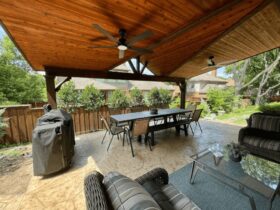
Yes, and this is where many homeowners begin to see the long-term value of a well-designed outdoor living space. Think about two identical outdoor chairs. One sits in direct sunlight every day. The other sits beneath a patio cover.
After a few Texas summers, the difference can be surprisingly noticeable. The chair exposed to constant sunlight often shows more fading, more surface wear, and a shorter lifespan. The protected chair generally retains its appearance longer.
The same principle applies to patios, masonry features, outdoor kitchens, decorative finishes, and deck surfaces. Shade doesn't eliminate aging, but it can reduce the constant exposure that contributes to premature wear.
This is one reason patio covers remain among the most popular outdoor living upgrades throughout North Texas. Homeowners appreciate the comfort they provide, but many also value the added protection for the spaces they've invested in.
Can Patio Color Affect How Hot Your Outdoor Space Feels?
Most homeowners have experienced the difference between wearing a black shirt and a white shirt on a sunny day.
Outdoor spaces work much the same way.
Darker materials tend to absorb more solar energy, while lighter surfaces reflect more sunlight. As a result, color can influence how hot certain areas feel throughout the day.
This doesn't mean every patio should be light-colored. Dark stains, stone accents, and architectural details can create beautiful visual contrast.
However, choosing lighter tones for patio ceilings, patio undersides, and certain outdoor finishes can help create a brighter and potentially cooler-feeling environment.
The U.S. Department of Energy notes that lighter-colored surfaces generally absorb less heat than darker materials.
Which Outdoor Materials Hold Up Best in Texas Heat?
There isn't a single material that's perfect for every project.
The best outdoor spaces typically combine materials that complement both the home and the local climate. Some materials simply tend to perform better than others when exposed to years of North Texas heat, UV exposure, and changing weather conditions.
Materials Commonly Used in Texas Hardscaping
- Concrete: Durable, versatile, and one of the most popular patio materials in North Texas.
- Masonry & Stone: Known for longevity, weather resistance, and timeless curb appeal.
- Aluminum Patio Covers – Low-maintenance and resistant to warping, rot, and insect damage.
- Pressure-Treated or Cedar Wood: Beautiful for decks and structures when properly maintained.
- Composite Decking: Designed for durability with less maintenance than traditional wood.
Ultimately, the materials matter, but so does the quality of the design and installation.
A well-built outdoor space is far more likely to withstand years of Texas weather than one built without long-term performance in mind.
How Can Homeowners Protect Their Outdoor Space During Summer?
Protecting an outdoor living space doesn't require a complete renovation.
In many cases, small preventative steps can make a significant difference.
Providing shade where possible, maintaining protective finishes, cleaning surfaces regularly, and addressing minor issues before they become major problems can all help extend the life of outdoor materials.
For many homeowners, the goal isn't simply avoiding damage. It's creating an outdoor environment that remains comfortable, functional, and enjoyable even during the hottest months of the year.
Don't Let a Texas Summer Win
North Texas summers are tough on outdoor spaces.
Between intense sunlight, high temperatures, and daily UV exposure, patios, decks, masonry features, and other hardscaping elements face challenges year after year. The good news is that thoughtful design, quality materials, and proper protection can help your outdoor space continue looking and performing its best.
At Decathlon Construction, our mission is to go ALL IN to create an outstanding experience, using a committed, disciplined, and optimistic process that creates Outdoor Living Spaces.
Since 2003, we've helped homeowners throughout Addison, Allen, Carrollton, Dallas, Fairview, Connell, Farmers Branch, Frisco, Garland, Heath, Lavon, Lewisville, Lucas, McKinney, Murphy, Parker, Plano, Prosper, Richardson, Rockwall, and Rowlett create outdoor spaces designed for long-term enjoyment.
If you're considering a patio cover, concrete patio, masonry feature, deck, or complete outdoor living transformation, contact Decathlon Construction today and let's create an outdoor space built to handle Texas summers.
 972-530-3884